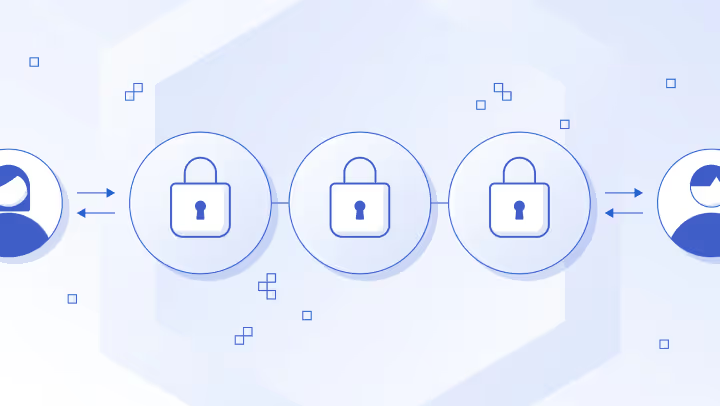
Understanding Blockchain Loyalty Programs
Blockchain loyalty programs replace traditional points databases with tokenized digital assets and smart contracts. This approach enables interoperable reward environments, true digital ownership for consumers, and automated reward distribution.
Traditional customer reward systems frequently suffer from fragmentation, restrictive redemption rules, and isolated databases. Consumers often accumulate points they cannot use, while brands face mounting balance sheet liabilities from unredeemed rewards. Blockchain loyalty programs offer a modern approach by replacing isolated points systems with tokenized digital assets managed onchain.
By using smart contracts and digital wallets, enterprises can create unified, interoperable reward networks. This shift allows brands to automate reward distribution, facilitate coalition partnerships, and provide users with verifiable ownership of their digital assets. Understanding the mechanics, benefits, and implementation of blockchain loyalty programs helps business leaders upgrade their existing systems and improve customer engagement.
What Are Blockchain Loyalty Programs?
Blockchain loyalty programs are customer retention strategies built on decentralized network infrastructure. In a traditional loyalty model, points are stored in an isolated, centralized database controlled entirely by the issuing brand. These points are typically non-transferable, subject to arbitrary expiration dates, and limited to a narrow catalog of redemption options. Blockchain loyalty programs replace these closed-loop databases with tokenized digital assets recorded on a public or private ledger.
Instead of database entries, rewards take the form of fungible tokens or non-fungible tokens (NFTs). Fungible tokens serve as a direct replacement for standard points, offering uniform value and divisibility. NFTs function as unique digital collectibles, digital membership cards, or verifiable proof of specific achievements. This tokenized approach fundamentally changes the relationship between brands and consumers. When customers earn a tokenized reward, they hold cryptographic proof of ownership in their digital wallets.
This architectural shift from centralized databases to onchain assets enables new functionalities that were previously impossible or highly inefficient. Tokenization allows loyalty assets to exist outside the proprietary walls of a single brand. Because the rewards reside on standardized blockchain networks, they can be programmed to interact with external applications, traded on secondary markets, or used across multiple partnering brands without requiring complex database integrations. By adopting this model, enterprises can transform rigid, liability-heavy point systems into dynamic, engaging networks that provide tangible value to their customer base.
How Web3 Technology Powers Loyalty
The foundation of modern reward systems relies on smart contracts, which are self-executing programs stored on a blockchain. Smart contracts automate the administrative processes that traditionally require manual oversight or complex backend logic. When a customer makes a qualifying purchase or completes a specific engagement metric, the smart contract automatically triggers the issuance of tokens or NFTs directly to the user. This automation extends to tier upgrades, where achieving a specific token balance instantly unlocks premium membership status and associated benefits without any administrative delay.
Digital wallets serve as the primary interface for these Web3 environments, effectively replacing physical loyalty cards and fragmented mobile applications. A single digital wallet can securely store tokens and NFTs from dozens of different brands. This unified interface allows consumers to view, manage, and use their entire portfolio of rewards in one place. For brands, the digital wallet provides a direct, secure communication channel to the customer, enabling targeted airdrops and personalized engagement based on verifiable onchain activity.
Tokenization further enhances the utility of these programs by enabling peer-to-peer trading and fractional ownership. Unlike traditional points that are locked to a specific user account, tokenized rewards can be transferred between individuals securely. If a customer earns a premium travel voucher or an exclusive merchandise NFT they do not wish to use, they can trade it on a secondary market. Fractional ownership also becomes possible, allowing multiple users to pool their tokenized assets to access high-value rewards or exclusive experiences that would be unattainable individually.
Key Benefits for Brands and Consumers
Implementing onchain reward systems generates substantial advantages for both enterprises and their customer bases. For consumers, the primary benefit is true digital ownership. When rewards are tokenized and held in a personal wallet, the user maintains full control over the asset. This structure prevents arbitrary point devaluation and unfair expirations, as the smart contract dictates the rules transparently. Additionally, interoperability allows consumers to use their rewards across a broader network of participating merchants. A customer might earn tokens from an airline and redeem them for a hotel stay or retail purchase, significantly increasing the perceived value of the loyalty program.
For brands, the financial and operational benefits are equally significant. Traditional loyalty points often sit on corporate balance sheets as massive financial liabilities. By transitioning to tokenized networks, brands can structure rewards as digital assets with market-driven value, potentially alleviating these liability burdens. Furthermore, blockchain infrastructure lowers customer acquisition costs by facilitating coalition partnerships. In a traditional setup, creating a joint reward program between two distinct companies requires expensive, custom API integrations and complex data reconciliation. With blockchain technology, brands can simply recognize and accept each other's tokens or NFTs through standardized smart contracts. This shared infrastructure allows enterprises to cross-pollinate their customer bases, driving new user acquisition while sharing the operational costs of the loyalty network. The result is a more capital-efficient model that maximizes engagement while minimizing administrative overhead.
Real-World Examples of Web3 Loyalty
Several major global enterprises have successfully integrated blockchain technology into their customer retention strategies, demonstrating the viability of tokenized rewards at scale. A prominent example is the Lufthansa Group, which launched the Uptrip application. Uptrip allows passengers to scan their boarding passes and receive NFT trading cards representing their flights, specific aircraft, or destinations. Once travelers collect specific sets of these digital cards, they can redeem them for tangible airline benefits, such as airport lounge access, flight upgrades, or frequent flyer miles. This gamified approach transforms a standard travel routine into an engaging digital collection experience.
Other major consumer brands have explored similar Web3 loyalty initiatives to deepen customer relationships. These programs often use NFTs to grant access to exclusive merchandise, virtual experiences, or private community events. By offering unique digital collectibles rather than standard discount codes, brands create a sense of exclusivity and long-term value for their most dedicated customers.
Beyond single-brand initiatives, the technology enables coalition loyalty networks where multiple entities share a unified reward network. In these decentralized networks, a consortium of retailers, service providers, and entertainment venues can issue a standardized loyalty token. Customers earn tokens at a grocery store and spend them at a partnered gas station or movie theater. Because the transactions are recorded on a shared ledger, the participating businesses do not need to build complex bilateral data-sharing agreements. The blockchain serves as the single source of truth, automatically settling transactions and ensuring that each brand is accurately compensated for the rewards redeemed within their specific venues.
Challenges and Implementation Roadblocks
Despite the clear advantages, enterprises face several structural and technical challenges when deploying blockchain loyalty programs. The most prominent hurdle is user experience friction. Non-crypto-native consumers are often unfamiliar with the processes of setting up digital wallets, securing private keys, and navigating network transaction costs. If a customer must pay a gas fee simply to claim a loyalty reward, the friction will severely limit adoption. To address this, enterprises must use account abstraction and sponsored transactions, allowing the brand to subsidize network fees and offer simplified, email-based wallet creation processes behind the scenes.
Technical integration presents another major roadblock. Most large enterprises rely on existing CRM systems and point-of-sale infrastructure that were not designed to communicate with decentralized networks. Bridging the gap between Web2 databases and Web3 smart contracts requires a unified orchestration layer to ensure that offchain purchasing data accurately triggers onchain token issuance. Without reliable data connectivity, the loyalty program cannot function in real time.
Furthermore, businesses must navigate complex regulatory and compliance considerations regarding tokenized assets. To manage this, brands can use the Chainlink compliance standard and its Automated Compliance Engine (ACE) to embed programmable policies directly into their assets, such as enforcing KYC checks for high-value redemptions or restricting secondary transfers to verified users.
The Role of Chainlink in Blockchain Loyalty Programs
Building an onchain reward system requires secure infrastructure to connect smart contracts with real-world data, existing business logic, and cross-chain environments. The Chainlink platform provides the orchestration, data, interoperability, and compliance standards necessary to bridge enterprise operations with blockchain networks.
To issue rewards based on customer activity, smart contracts must receive reliable data from existing CRM platforms and point-of-sale systems. As the unified orchestration layer, Chainlink Runtime Environment (CRE) enables developers to securely connect their smart contracts to any external API, existing system, or blockchain network. By using CRE, brands can automatically trigger onchain token distribution the moment a customer completes an offchain purchase, ensuring synchronization between physical retail locations and Web3 loyalty databases without disrupting existing infrastructure.
This connectivity also enables the creation of dynamic NFTs. Unlike static digital collectibles, dynamic NFTs can change their metadata and visual appearance based on external inputs. Through the Chainlink data standard, specifically using SmartData to enrich tokenized assets with offchain information, an enterprise can automatically upgrade a customer's loyalty NFT from a basic tier to a premium tier as their lifetime spending increases. This real-time evolution provides a highly personalized and engaging user experience.
Additionally, modern loyalty networks must operate across multiple blockchain networks to maximize user reach. The Chainlink interoperability standard, powered by the Cross-Chain Interoperability Protocol (CCIP), provides a highly secure framework for transferring tokens and arbitrary data between different blockchains. By integrating CCIP, brands allow consumers to port their loyalty tokens and NFTs across various network environments. This interoperability ensures that a customer's digital assets remain accessible and usable, regardless of which specific blockchain a partnering merchant chooses to build upon, fostering a truly unified global reward network.
How to Launch a Blockchain-Based Loyalty Program
Transitioning an enterprise reward system to Web3 infrastructure requires a strategic roadmap and careful technology selection. The first step involves defining the core objectives of the program, such as reducing liability, increasing interoperability, or targeting a younger demographic. Brands must decide whether to issue fungible tokens for standard point replacement, NFTs for exclusive memberships, or a combination of both.
Once the strategy is established, selecting the appropriate technology stack is critical. Enterprises generally deploy their loyalty smart contracts on layer 2 blockchain networks. These networks offer the high transaction throughput and low fees required to process thousands of micro-transactions daily while maintaining the security guarantees of the underlying base layer. To ensure a straightforward user experience, developers should consider implementing gasless transaction relayers and account abstraction. This infrastructure allows customers to interact with the blockchain without needing to hold native cryptocurrency to pay for network fees, effectively hiding the complexity of Web3 from the end user.
The final component of the technology stack involves integrating a central orchestration layer to connect the onchain architecture with the brand's existing infrastructure. Using CRE ensures that offchain purchase data accurately triggers onchain workflows and that tokens can move securely across different blockchain environments. Before a full public launch, enterprises should conduct smart contract audits and pilot the program with a small segment of their most active users. This phased rollout approach allows brands to refine the user experience and test system integrations before scaling the loyalty program globally.
The Future of Enterprise Reward Networks
Blockchain loyalty programs represent a fundamental shift in how enterprises approach customer retention and engagement. By replacing isolated databases with tokenized digital assets, brands can offer consumers verifiable ownership, increased transparency, and expansive interoperability. This modern approach revitalizes the user experience while allowing businesses to reduce balance sheet liabilities and forge coalition partnerships with other merchants. Executing this transition requires infrastructure to connect onchain smart contracts with existing enterprise data systems. Through orchestration, data, and interoperability standards provided by the Chainlink platform, businesses can securely bridge their traditional operations with decentralized networks. Tokenized reward systems provide a clear path for enterprises seeking to build durable, high-value relationships with their customer base.